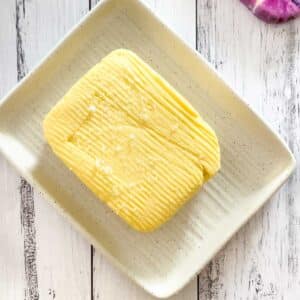
Cultured Butter Recipe | Make Your Own At Home
Learning to make Cultured Butter gives you a simple skill that results in two delicious products. Butter and buttermilk.
Print
Pin
Servings: 16 servings
Calories: 88kcal
Equipment
- 1 Stand mixer or hand churner
- 1 Piece of cheesecloth or a thin, clean dish cloth
Ingredients
- 400 ml heavy cream or double cream (min. 35% fat)
- ¼ cup plain yoghurt (see note 1)
- sea salt (optional - see note 2)
Instructions
Day 1
- Pour the yoghurt into a large bowl, add the cream, and whisk together to combine.
- Cover the bowl with a clean cloth and set aside to ferment for 12-24 hours. The cream will have thickened slightly and smell a little sour when ready.
Day 2
- Once the cream has cultured to your liking, place it in the fridge for an hour or two. This is not essential though cold fat churns more efficiently and results in a firmer butter so I recommend not skipping this step.
- Put some ice cold water in a large bowl and set it aside. Line a fine mesh sieve with cheesecloth or a thin, clean dish cloth and place this over a large bowl. Also set this aside for now.
- Tip the chilled, cultured cream mixture into the bowl of a stand mixer fitted with the whisk attachment.
- Begin churning on medium speed, gradually increasing to medium-high until the butter solids separate from the liquid buttermilk.
- Pour the butter ball and buttermilk into the lined sieve set over a bowl. Pick up the ends of the cheesecloth and bring them together. Squeeze the butter ball so any trapped buttermilk is release into the strainer/bowl below (see note 3).
- Next, take the butter and form it into a ball in your hands. Now dunk it into the iced water several times squeezing it as you do. You want to rinse it well and wash off any remaining buttermilk to ensure the butter doesn't spoil (see note 4).
- Squeeze out any excess water from the butter then, place it on a clean kitchen bench or chopping board, sprinkle with salt and knead it through before shaping.
- Shape the butter into a block using butter paddles, roll it into a log, or press it into a butter mold.
- Store in a butter dish or butter bell, or wrap it in plastic wrap/wax paper and store it in an airtight container in the fridge. It will keep this way for 3-4 weeks.
Video
Notes
Note 1: Substitute the yogurt with buttermilk, sour cream or crème fraîche if preferred. If using buttermilk ensure it's the traditional full-fat variety, not a skim milk product.
Note 2: Adding the salt is optional. If you want unsalted butter just leave it out.
Note 3: Remember to reserve the excess buttermilk too! It’s a valuable byproduct for baking, to use in dressing, to tenderise meat or just nice to drink.
Note 4: Wash the butter until the water is clear/not cloudy. This is crucial as residual buttermilk can cause the butter to spoil. Leaving residual buttermilk in the butter can also reduce its shelf life.
Nutrition
Serving: 15g | Calories: 88kcal | Carbohydrates: 1g | Protein: 1g | Fat: 9g | Saturated Fat: 6g | Polyunsaturated Fat: 0.4g | Monounsaturated Fat: 2g | Cholesterol: 29mg | Sodium: 8mg | Potassium: 24mg | Sugar: 1g | Vitamin A: 372IU | Vitamin C: 0.2mg | Calcium: 21mg | Iron: 0.03mg
