
How To Make Truffle Salt At Home

Homemade Truffle Salt is not just a fun kitchen project; it’s also a great way to capture that luxurious seasonal flavour and have it on hand whenever you need it, year-round. The rich, earthy aroma of black truffles combined with a simple sea salt easily transforms everyday meals into something truly special.

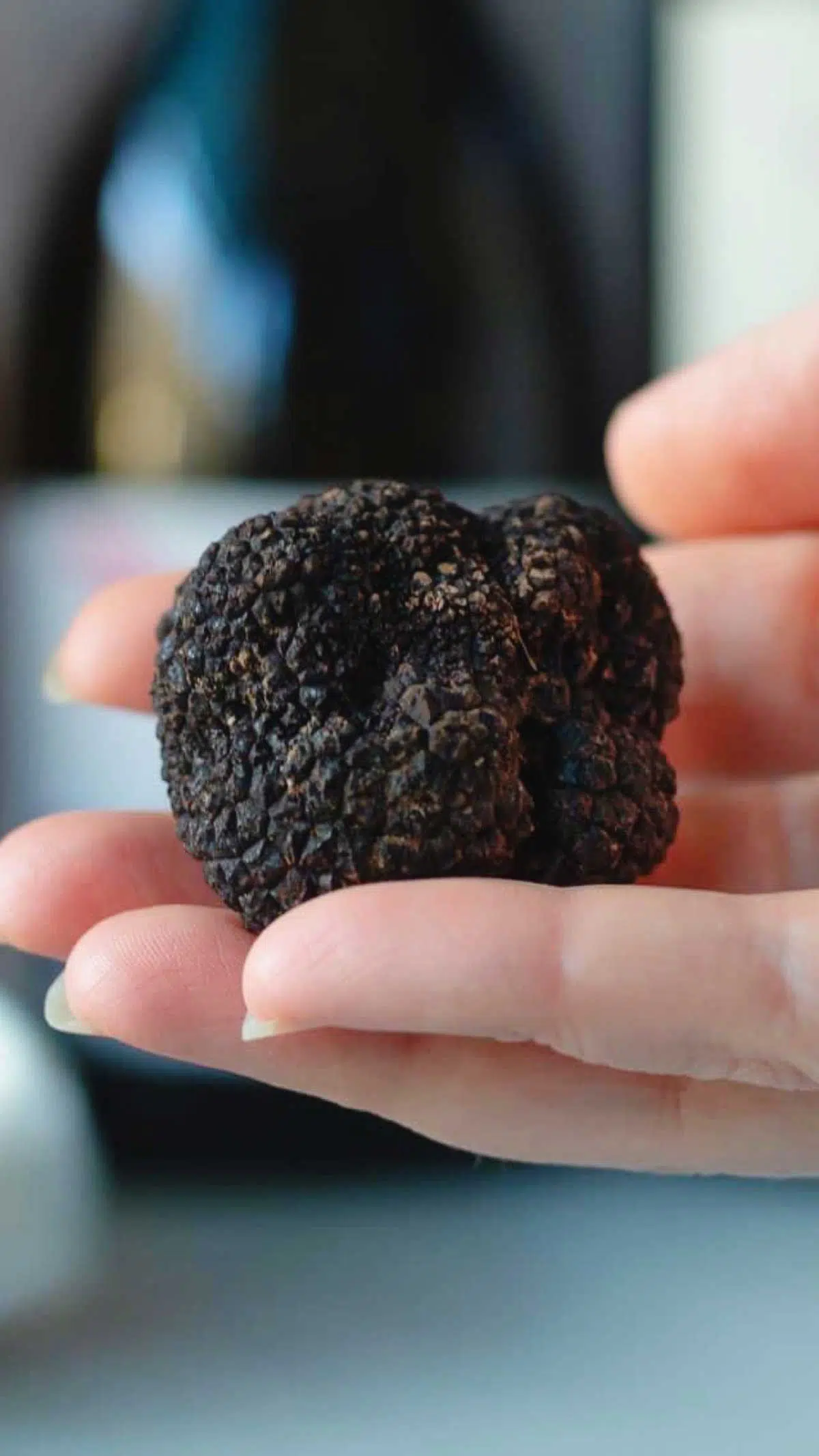
What Are Truffles?
Truffles are the fruiting body of fungi that grow underground in a symbiotic relationship with the roots of certain trees, like oak and hazelnut. Farmers use certain breeds of dogs and pigs to help hunt and unearth this prized winter delicacy, as their attuned sense of smell, can easily detect the scent of mature truffles.
Truffle season is relatively short and are really at their best in the peak of winter.
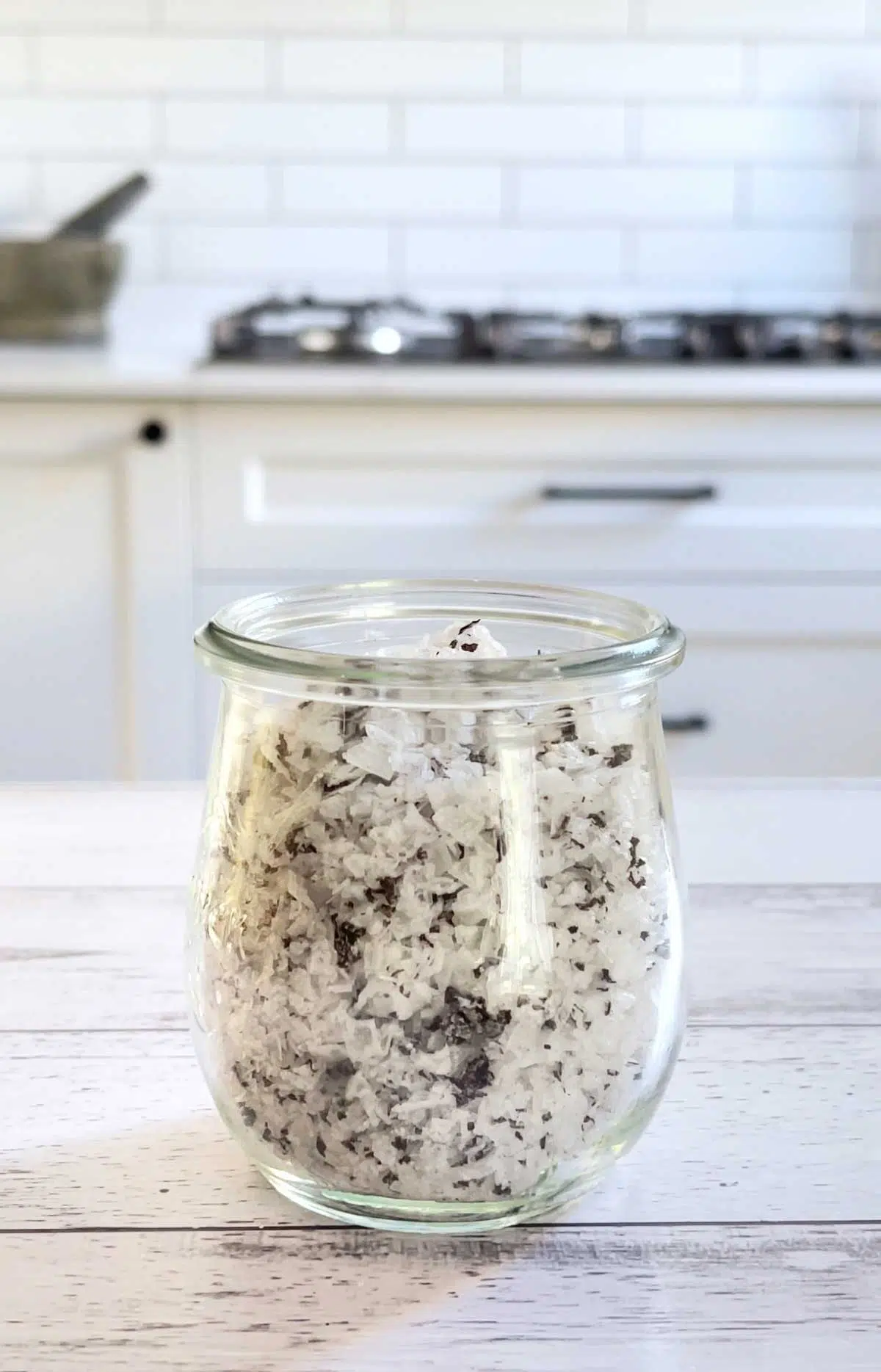
Key Ingredients
Making your own black truffle salt is a fantastic way to infuse your cooking with a deliciously pungent aroma and flavour, and it all comes down to two key ingredients: the fresh black truffle and the sea salt. The recipe is very easy to make and requires little hands-on time. You will need some patience though, as this is at its best when dehydrated before storing.
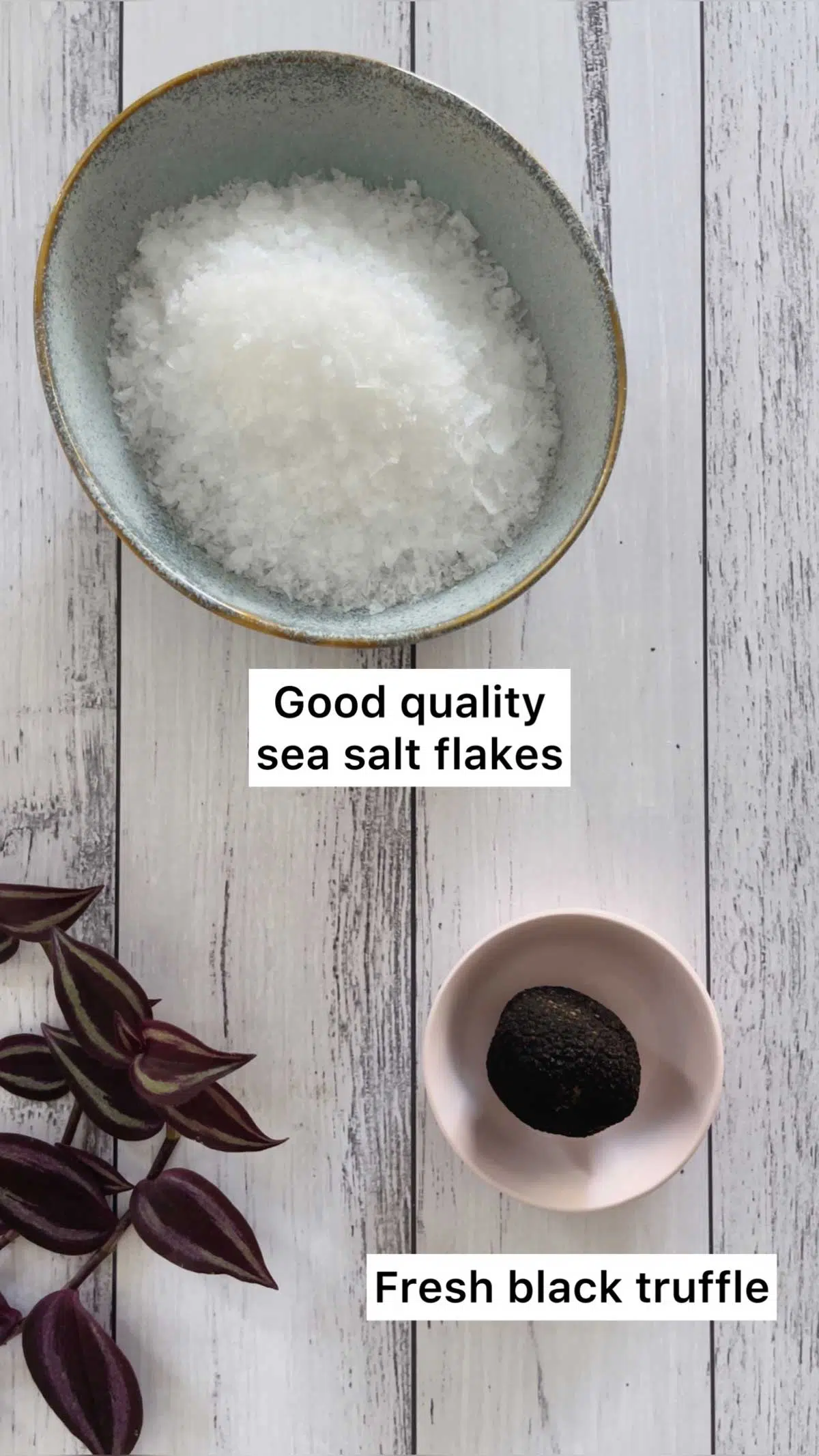
- Sea salt flakes – the best quality you can find to ensure the flavour of your truffle shines.
- Fresh black truffle – these are bought direct from trufferies and can be found at some retail stores during truffle season.
The quality of the fresh black truffle is paramount. Source truffles that are firm, freshly harvested and completely intact if possible (it isn’t always). They should emit an earthy, slightly sweet aroma. Reputable truffle suppliers will be able to tell you when and where the truffle was harvested.
Substitutions And Variations
It’s possible that a high-quality truffle paste or preserved truffles would work well as a substitute in this recipe. I have not tried either of these as yet, but if you choose to, I would start with adding 1 teaspoon to the salt. The intensity of these products can vary greatly so you may want to add more or less depending on your preference. Keep in mind that the intensity of truffle increases once the mix is dehydrated.
If using one of the above methods avoid truffles preserved in oil. I also do not recommend using truffle oil in any of my fresh truffle recipes. The artificial flavourings they contain often have a very harsh, chemical taste that will not mimic the flavour of fresh truffle that you’re after.
How To Make This Black Truffle Salt
There are two simple methods for making truffle salt. The first is simply putting a small piece of truffle into a jar of sea salt and letting the flavour infuse. The other is to grate truffle into the salt and this is my preferred method. Not only do you get the flavour and aroma of the truffle, but you also get little flecks of it in your meal too.


- Finely grate the truffle into the flaked sea salt.
- Mix the truffle and salt – you’re looking for an even distribution.
- Spread the combined salt mix out on a silicone dehydrator sheet and dehydrate at 100°F/38°C overnight (or for 8 hours).
- Once cooled, pour the finished salt into a jar with a tight-fitting lid and keep in a cool dark place. It will keep this way for a few months or up to a year. It can still be used after this though the pungency of the truffle may start to reduce.
The truffle is quite moist when grated so drying out the mix combats this and deters spoilage. If you don’t have a dehydrator, the oven is another great option if yours can maintain very low temperatures. Anything over 104°F/40°C could cook the truffle and reduce its pungency.
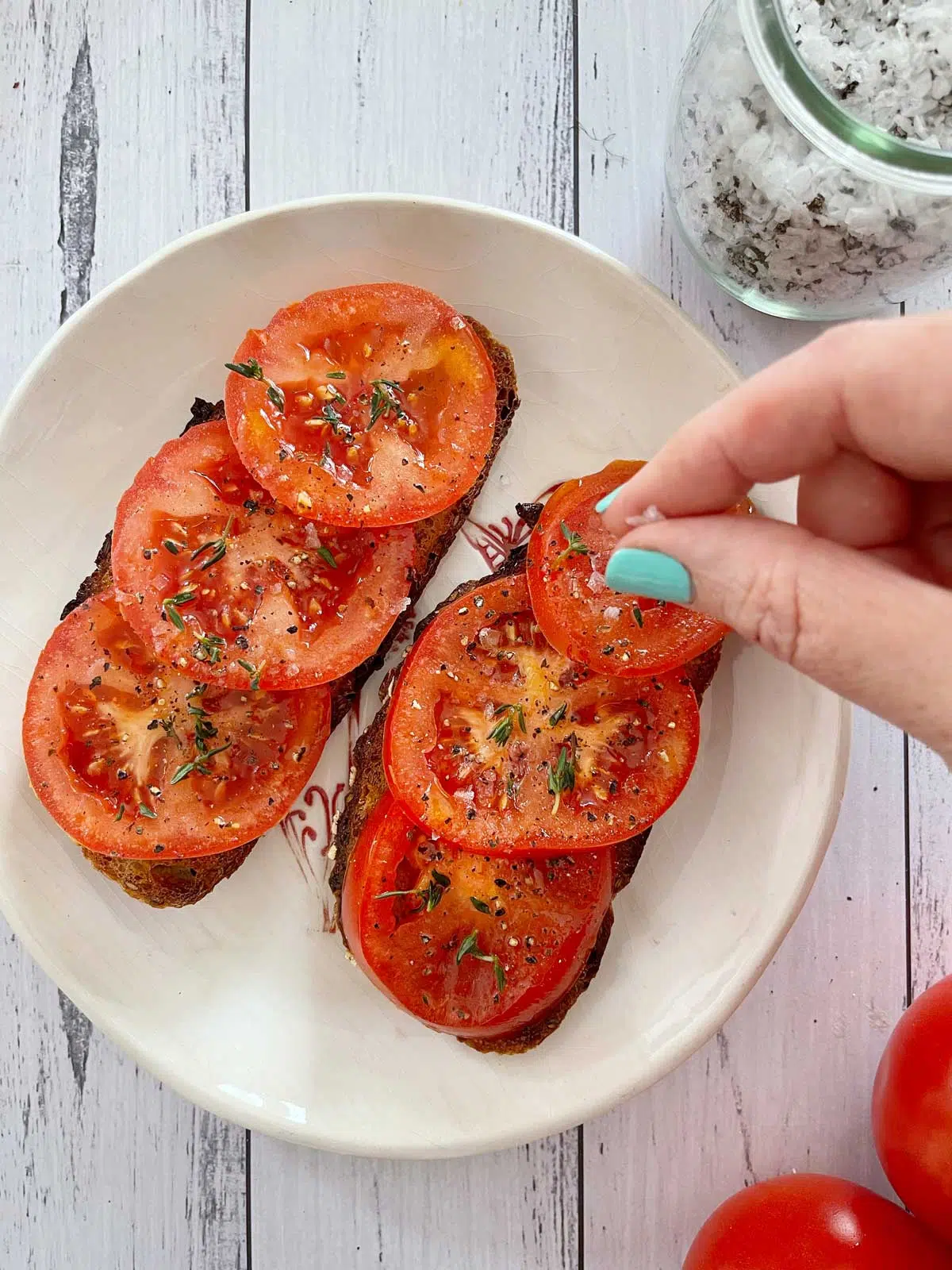
Tips For Success With This Recipe
Flaky sea salts are the best choice for this recipe. Their larger, flat crystals provide plenty of surface area to allow for the absorption of truffle flavours. The key is to select a pure sea salt without additives or anti-caking agents, as these can interfere with the truffle infusion.
Use a microplane to grate the truffle. This allows for better dispersion of the truffle throughout the salt.
Proper dehydration is essential for the stability and shelf life of this truffle salt. Any residual moisture can lead to clumping, mould growth, and a significant degradation of both the salt’s texture and the truffle’s delicate aroma. The mixture should feel entirely dry and brittle to the touch after the dehydration process. If there is any doubt, continue drying at a low temperature until no moisture is detectable. Periodic stirring during drying ensures that all parts of the mixture are exposed to airflow and dry evenly.

Storing
Once the black truffle salt has been thoroughly dehydrated, transfer it to an airtight container. Glass jars with tight-fitting lids are ideal. Plastic containers can sometimes absorb odours or allow air to get in, potentially compromising the salt’s longevity.
Store the sealed container in a cool, dark place, away from direct sunlight, heat, and humidity. Your pantry is perfect. It will keep this way for several months or up to a year.
This recipe is not suitable for freezing.
Truffle Salt FAQs
If kept in an airtight jar, it can last for many months or up to a year depending on how well it was dried. It of course doesn’t go off after that however, the pungency of the truffle is greatly reduced.
You can use truffle salt as you would a plain sea salt. But it makes an excellent addition to scrambled or poached eggs, added to pasta, sprinkled on popcorn, used in risotto or on a dish of polenta.
Salty and earthy. Truffles have a very deep and rich earthy flavour, which is what gets infused into the salt.
More Condiment Recipes
Did you make this recipe?
If you try this recipe, I’d love to know. Leave a comment, rate it, and remember to tag @wholenaturalkitchen in your pics or reels on Instagram, Facebook or TikTok!
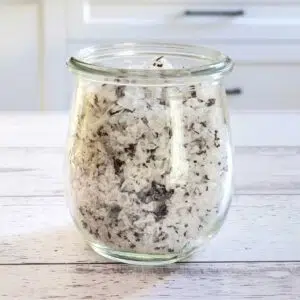
How To Make Truffle Salt At Home
Equipment
- 1 Dehydrator (can also be done in an oven if it can be used at very low temperatures)
Ingredients
- 3.5 oz sea salt flakes (100g)
- 0.3 oz fresh black truffle (10g)
Instructions
- Finely grate the truffle over the salt. I used a microplane to do this.
- Mix with a spoon to combine, and ensure the truffle is evenly distributed throughout the salt.
- Place the truffle salt on a silicone dehydrator sheet and spread it out so it's nice and flat.
- Dehydrate at 100°F/38°C overnight (or for 8 hours).
- Store in an airtight glass jar in a cool, dark place.
I just bought a small fresh piece of truffle at a farmer’s market today because I wanted to try making truffle salt. Since it was my first time, I didn’t want to buy a whole truffle, so the vendor broke off a small piece of the truffle, because the whole one would have cost around $23(!). The piece I bought was around 5 grams at $1.50/ gram, totalling $7.50 CDN which was expensive enough for this experiment! (As an aside, he told me the truffles are just coming into season now in June and they were from Iran. He said there are higher flavoured truffles from other countries which sell for around $5/ gram! Ouch!!)
I bought high quality fleur de sel to use in this recipe.
Have you ever dehydrated in an air fryer? The auto-setting for dehydrating in the air fryer indicates temp. of 160F for 6 hours, but I often find the recommended settings on my air fryer over cook certain items. Any insight? TIA!
Hi Anne – I apologise profusely for this delayed response. I’ve been travelling in outback Australia with little to no access to the internet and my website was a bit heavy for the very slow loading speeds I had on offer, so I couldn’t get in. Now to your question – truffles are very expensive, which is why I’ve found making truffle salt a great way to preserve the flavour to add to meals for a much smaller outlay. I haven’t tried dehydrating in my air-fryer because I got it after writing this recipe however, truffle season is upon us here in Aus so I will give it a go this winter and report back. In the meantime, you could definitely give it a go if you haven’t already. My air-fryer generally sets itself to 4 hours on the dehydrate function. I’d be inclined to check the salt for dryness every hour though as it tends to work much faster than a dehydrator.
I’m curious if you can use a preserved truffle found in a jar? If so would you suggest one that is in water or oil? Do you have a recommendation on one that you have used?
Hi Melissa – no I can’t say I have used anything but fresh truffle to make this salt. I’ve not actually tried the preserved kinds either, but based on the preserving techniques I would imagine the truffle in water and salt would be the better option for this recipe. Oily foods don’t dehydrate well, as the fat can go rancid. Hope that helps!
Your Truffle Salt recipe was a game-changer! 🍄🧂😍 Everyone in my family loved it, and we’ve been sprinkling it on everything from roasted veggies to popcorn.
That’s so great to hear! Thanks so much Sophie.
I feel like I learnt so much about truffle salt in this post, thanks for sharing!
Thanks, Charla!
I found this truffle salt super easy to make and a perfect condiment to have throughout the year.
Me too Andrea! So glad you got to make it.
Yummy!!! Used this on some homemade truffle fries and it was incredible!
Awesome – that’s a perfect use for it Ali. So happy to hear you enjoyed it.
My family loves anything and everything truffle related. We usually get our Truffle Salt from Trader Joe’s but now I can’t wait to make it at home. We’ll probably need to make a double batch. Great recipe idea.
Thanks so much Maike! Once you see how easy it is to make it’s so great to do it yourself. The truffle aroma lasts so much longer.
That’s an interesting truffle salt recipe. Can I use it on my meat or other rice dishes?
You definitely can Saif. It would be delicious on both.
can you make black truffle salt with a truffle from a jar?
Hi Barbara – are you able to give me a little more information on the type of truffle it is? There are a few methods for preserving truffles that are sold in jars and knowing which it is will help me answer your question more thoroughly. I’d hate to see any of this little treasure go to waste! Often truffles in jars may be preserved whole in oil or a brine, sold in chunks, frozen, or simply brushed? Is it one of these?