
Rosella Jam | Small Batch
Rosella Jam is a treat well-known to Australians. Sadly though, it’s not something that’s easy to come by. Generally, if you’d like rosella you grow your own, and that’s exactly what I did this year!
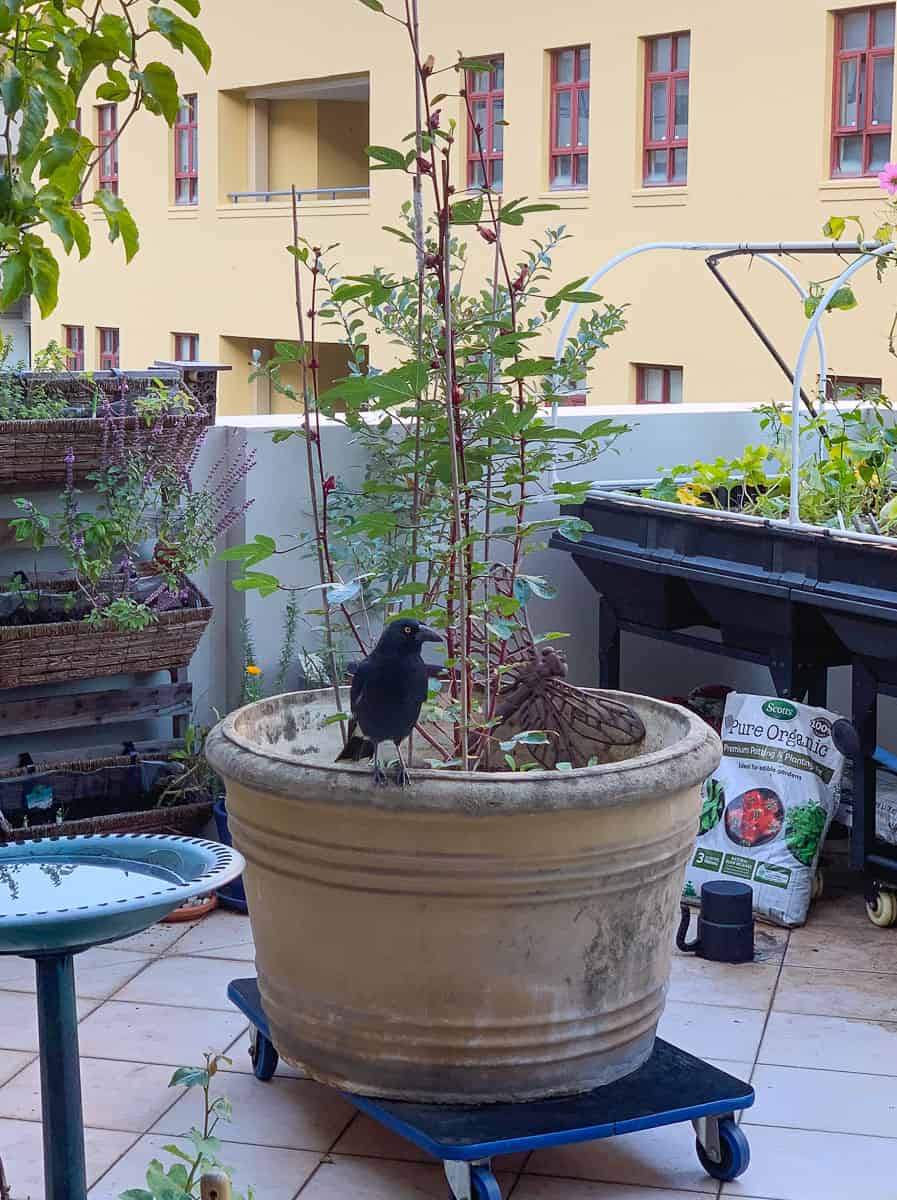
The plant is quite hardy and will produce an abundance of fruit as well as beautiful flowers. The trick is to ensure you keep harvesting them as they ripen to encourage more growth.
This season I largely dehydrated the leaves to keep aside for rosella tea. I also infused some in honey, which has been delicious. As the season came to a close though I had two small handfuls left on the rosella bush. So, rosella jam it was, albeit a tiny batch.
Do make sure you keep some seedpods aside so you have seeds to grow next year too.

A Bit About Rosella
Rosella, also known as wild hibiscus, is ruby red with a deliciously tart flavour. It is known as an Australian bush tucker food but it’s not actually a native, and was imported from Africa. I’ve read also that others believe it was imported from Indonesia however, most sources agree on Africa. I believe it was in fact the Egyptians who first made it into a tea too.
It’s traditionally considered a wild grown food but it’s also popping up in many backyards. I was introduced to it by a friend and found it in my community garden, which is where I fell in love with it.
Additionally, rosella is rich in vitamin C and antioxidants so is a wonderful food to include in your diet.
How To Make Rosella Jam
The great thing about making rosella jam is that the same recipe works with any quantity of fruit.
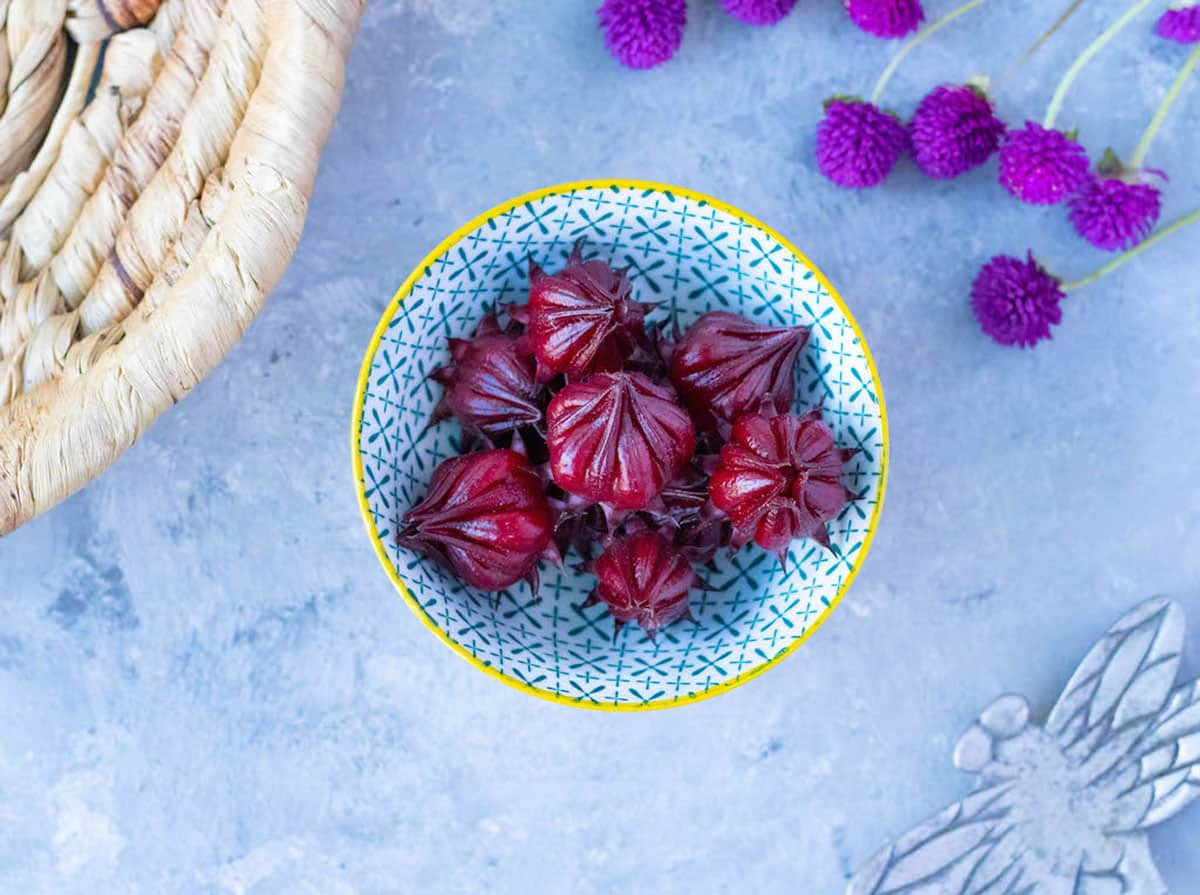
All you need do is remove the calyxes (red leaves) from the seedpods for the volume of fruit you have. It was 14 for me today, which was loosely – one cup.
You then wash the calyxes and the seedpods separately because you’ll be using both parts.
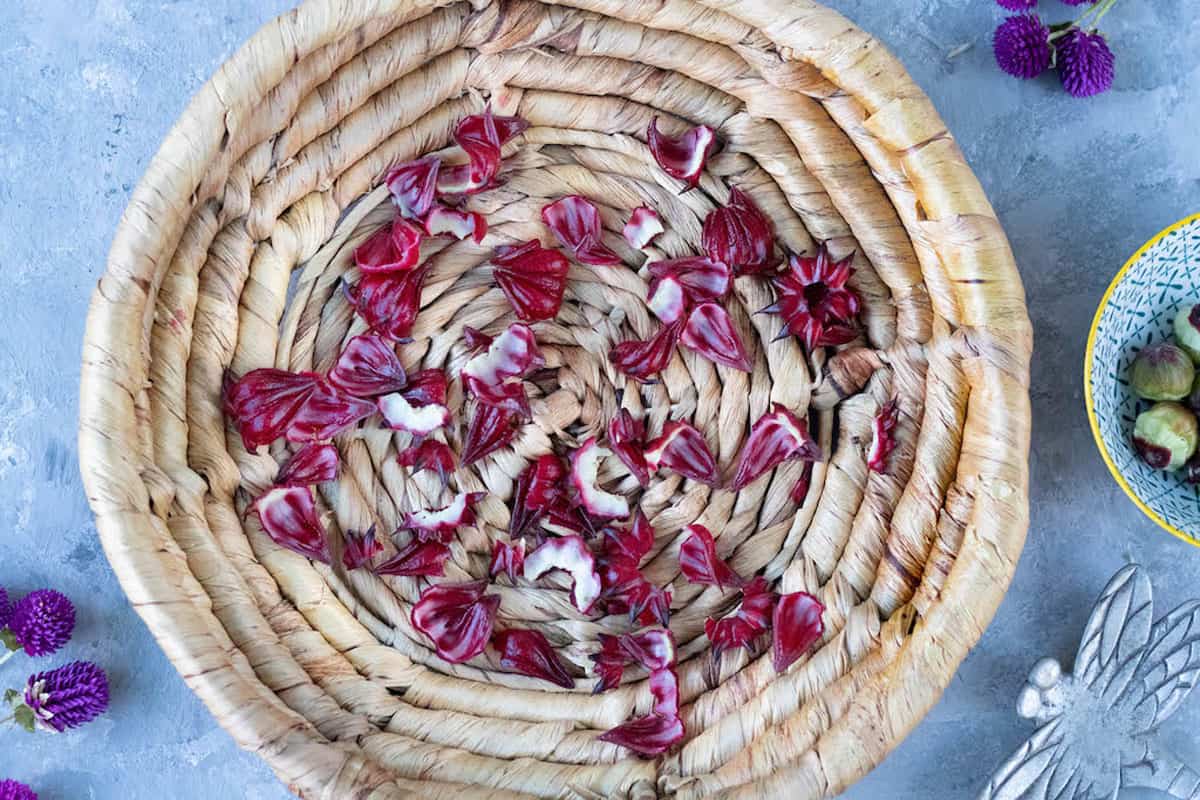
The seedpods are useful as they contain the pectin that helps the jam set. I like to slightly pierce the seedpod too.
You then add the volume of pierced seedpods you have to a saucepan and just cover them with water. Boil for 20-30 minutes or until soft.

Once that’s done, strain off and keep the liquid and put the seedpods in the compost.
Return the liquid to the same saucepan and add in the washed calyxes. Bring those to a boil and cook for another 20 minutes or until the liquid has thickened.
Remove the saucepan from the heat and measure the volume of cooked pulp. Return it to the saucepan and now add in the same volume of sugar along with the squeeze of lemon juice. Bring to the boil and cook for 10-20 minutes or until the jam has thickened then transfer to a jar and keep in the fridge.
See how easy it is? And why you don’t need to rely on a set recipe but rather – the volume you have on hand? That’s what I love most about this jam.
More Jams To Try
If you try this recipe, I’d love to know. Leave a comment, rate it, and remember to tag @wholenaturalkitchen in your pics or reels on Instagram, Facebook or TikTok!
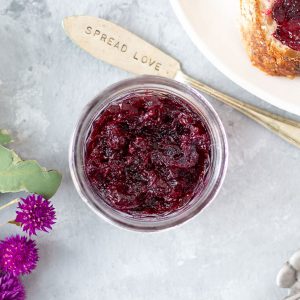
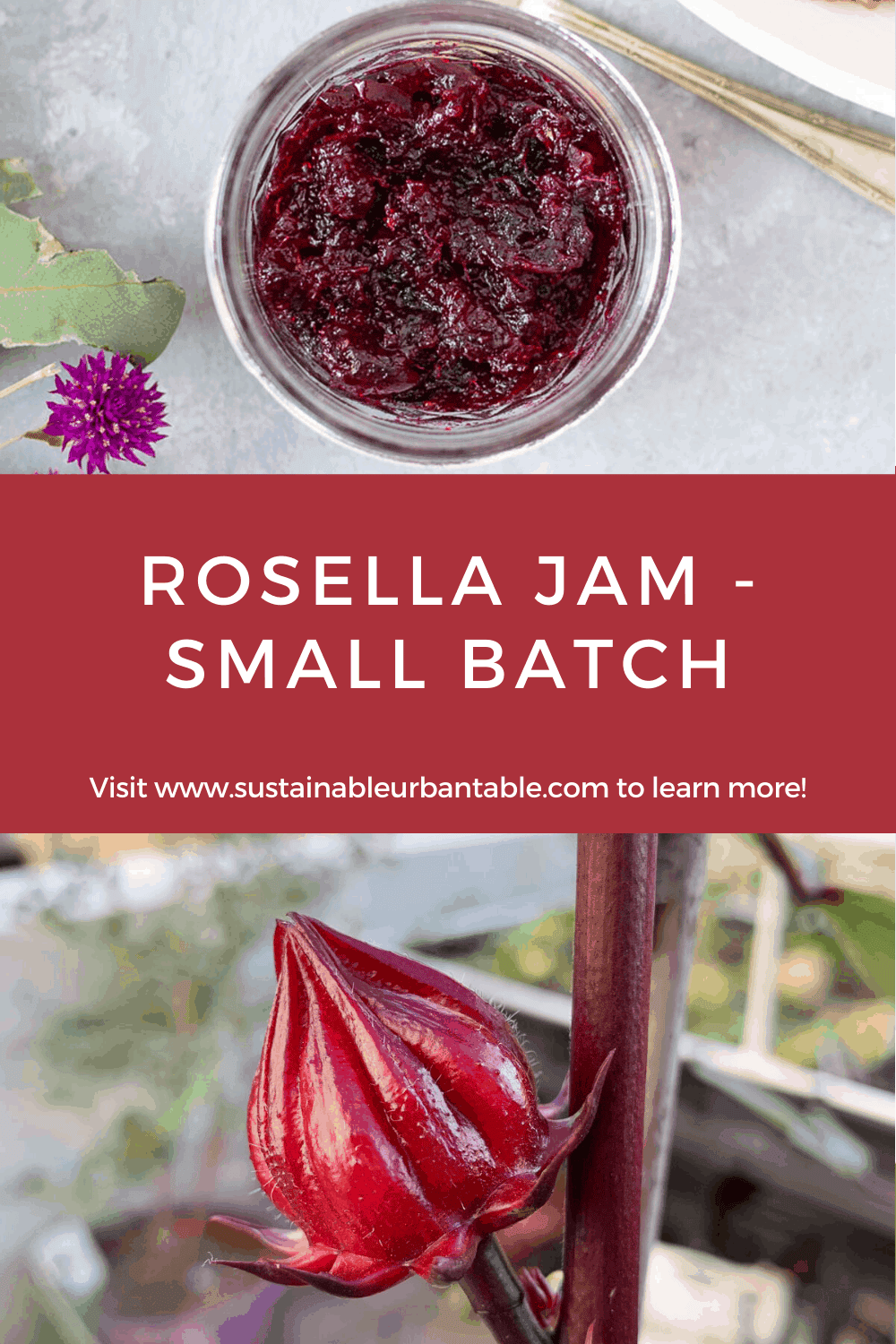
Rosella jam – small batch
Equipment
- Small saucepan
Ingredients
- Ripe rosella fruit
- Raw sugar
- Filtered water
- Lemon juice, just a squeeze
Instructions
- Remove the calyxes (red leaves) from the seed pods then wash and drain them separately
- Slightly break open the seed pods and add them to a small saucepan. Pour in filtered water until the pods are just covered. Do make sure they're submerged
- Bring to the boil and cook, covered for 20 minutes or until the pods are soft
- Strain and keep the liquid and put the seedpods in the compost
- Pour the reserved liquid back into your small saucepan and add in the washed calyxes. If the calyxes are not submerged in water add a tiny touch more filtered water
- Boil down for another 20 minutes allowing the mixture to thicken
- Remove from the heat and measure the volume of cooked pulp. Return this to the saucepan and add the same volume of sugar along with the squeeze of lemon juice
- Bring to the boil and cook for 10-20 minutes or until the jam has thickened
- Transfer to a clean jar and store in the fridge
Notes
Nutrition
Pin This Recipe For Later

Gabby Campbell
Gabby is a degree qualified Naturopath/Nutritionist (BHSc Nat) and published health writer. After many years in clinical Naturopathic practice, she moved to recipe development and online education to combat the abundance of misinformation about food and health online. Every recipe Gabby creates is shaped by her clinical knowledge. All use simple, everyday ingredients and many cater to common dietary needs like being gluten-free and dairy-free. MORE ABOUT GABBY
Making my rosella jam , I have separated the calyxes from the seeds, and have 2x 4 litre icecream buckets of calyxesxready to cook to a pulp.
I covered the seed pods with water, then boiled them for almost an hour ( as per the traditional recipe I had ) with the lid on virtually the whole time. However, when I drained them , only about 1 cup of the pink liquid has resulted. I’m wondering if I boiled tgem too long ,and if this amount will have suffient pectin/agent to set the 8 litres of flesh?
Should I reboil the seeds with another load of water to increase the amount, or would all of the setting agent already have been extracted, so no point, any suggestions??If the latter is the case, any suggestions?
Hi Laurel, I’ve only ever boiled the seeds quite briefly to get the required pectin. If doing that you could probably reboil them to extract more. I can’t say for certain, however, I imagine boiling them for an hour or so would mean most of the pectin has already leached out from the seeds. In this case, you might be better off using a specific jam setting sugar that contains added pectin to ensure your jam sets.
5 stars, couldn’t add more than 3 for some reason! Yum thankyou!
Hi Cathy, thank you so much! I’m not sure what happened with your rating but I have updated it for you. I’ll look into it though – and I’m so glad you enjoyed the jam. It’s such a unique flavour.
I love this rosella jam recipe -I’ve tried others but this is the best and it sets! This year I have efficiently made jam out of frozen rosella in my freezer. It thaws out quickly and is easier to separate the components. First time I have used the raw sugar (raw castor sugar) too.
So happy to hear it Inge. And that’s amazing re the frozen rosella! I’ve never grown enough to have an excess but hopefully one year I can try this out. Thanks for letting me know. Enjoy that delicious jam!
Very clear recipe, thanks. Roselle grows well here in Hong Kong and is just coming into season. A lovely jam! Would give 5 stars but I can’t get the rating buttons to go past 4.
Thanks so much Andrew! I had no idea this also grew in Hong Kong. You’d have the perfect climate for it there though I’m sure. Also -The rating is showing as 5 stars for me. Not sure what’s happened there.
Just harvested a kg of fruit and made this jam . Absolutely delish
That’s so great to hear Chris! I’m definitely looking forward to our Rosella season arriving in Sydney.
Very easy to make. Can’t wait to try it.
Yes, it’s super easy. I hope you love it when you do get to try it!
This is the easiest recipe I’ve ever used, amazing result!!
Thank you so much for sharing.
That is so wonderful to hear Leanne! I think it’s super easy too. Especially for a very small batch for those like me who maybe only have room for one shrub at a time.
Hello..tried the recipe today…delicious..thank you
That’s so great to hear Melanie. Thank you!
This is a really pleasing site. I made some jam and will be making more. The recipe worked well. I sometimes have difficulty getting jams to set as I always try to have a little less sugar. No problems here though.
That’s so great to hear Angela! It’s so nice to make something so delicious with the rosella fruit too.
I’ve made this recipe for many years Gabby. I’m now 75years old and my mother made it every year until she died. I used to help her until I married and then did my own. It is such a great fruit for Jam. However for the past few years the trees have simply died before the fruit could be harvested but my nephew grew them on his farm and has given me his fruit to make the Jam. For the past two years the Jam has not set and I’ve had to reheat, add Jamsetter and reboil for another 5 + minutes. Even then the jam is still not as firm as I would like and is over cooked and of a dark colour. Why has this happened?
What lovely memories you have with this jam, Rita. I love recalling my time in the kitchen with my Mother too. I still love using all her pots and pans that I have. As to the jam not setting though – that is a bit of a mystery. Especially so as you’ve even tried adding jamsetter! You have a lot of experience with this fruit and I dare say preserving in general so I don’t mean to be giving you over simplistic answers – but jam not setting generally means there isn’t enough pectin. As such, I’m wondering if the fruit may have been picked a little too early? A good indication it’s perfect to use is the seed pod having a decent tinge of green in it or being completely green. I like to pierce them too so that more pectin leaches out when they boil. If you only had, say, half fully rip and half not quite so ripe it’s likely not given you enough pectin, even with the jamsetter.
Love this recipe! It was so simple and the jam is delicious. I did use white sugar as I didn’t have enough raw but will try it with that next time. Thanks heaps
That’s so great to hear Kyra! White sugar is fine to use, I generally just have raw in the cupboard though so that’s what I use in most of my jams. Or sometimes honey.
Love how simple this recipe is. I’m not a jam eater but am in my first season of growing Rosella. I have now made 3 batches of this jam & my son & neighbors are loving it.
Thank you so much.
That’s wonderful to hear Carolyn. It’s such a treat! I look forward to my batch each year and now think I’ll grow several shrubs so I can make more than a small jar.
Hi ! From India
Rosella is quite a common plant out here and every year I get quite a few seeds ( pods) from my kitchen garden itself . I’m from the NE of India and we also use the leaves and pods as a souring agent for some curries . I also make jelly / jam . It’s easily available in the market this time of the year . Just went through your recipe . Incidentally I bought a kg yesterday and made 5 small bottles. Your other recipes are quite simple and sounds delicious too. will surely try some of these .
Hi Madhumita! Wow thanks for sharing, it’s so interesting to know that the pods can be used in curries like that. I might give it a try next time I have some. I’m learning so much more about where this plant grows thanks to all the wonderful comments here. I hope you enjoy the jam too!
Hi Gabby Interesting.
I’m from Oz and it’s a common enough plant here. One thing though, you do NOT need boil seeds at all. You do not need to keep the seeds as they do no contain pectin, the pectin is in the calyx. Save yourself a lot of time and just cook the calyx add 3/4 of quantity of rosellas ( cooked down) and boil as any other jam with lemon juice. It will st beautifully. Give it a go with a small batch and you will see I am right. You will also save yourself a lot of mess and time. 😊
That’s so interesting to hear Helen. I actually did follow a recipe before writing my own that did this and I didn’t have success. Mind you I had done several recipe tests at that point so it could have been user error. Too much or too little cooking down etc. I will definitely be giving this a go next time I have enough to try it out though because I agree, the easier and the less mess the better. Thanks so much for the tip!
What a disaster. I have made rosella jam before but following the recipe resulted in a jam mixture that smelt of the pectin in the seeds…not a luscious rosella aroma. Just tipped it all out. Other recipes suggest a half cup of the seed pectin, not the entire residue after boiling the seeds.
Hi Jennifer – I’m really sorry to hear this recipe didn’t work out for you. That’s definitely not my intent when testing/writing my recipes up! I like to think I test them thoroughly enough that those making them will have no issues at all. I’m interested to know how much liquid you had left after boiling the seeds though. This is a very small batch recipe so ½ to ¾ cup of the pectin liquid is roughly what’s produced given the small amount of fruit used – and assuming just enough liquid is poured over the seed pods/they weren’t completely swimming in liquid?
Wow, I definitely didn’t have this result. I have now made 3 batches to this recipe & all have turned out wonderful, my neighbors are extremely happy.
I heard about your site from Florida. I grew rosella a couple of years ago and they did great (at least 8 feet tall!) until mildew got them. I loved making the tea and didn’t know I could make anything else.
I have a new plant that has just started to flower. I’m excited to have found this recipe, as it will keep the loveliness going longer than a cuppa. I was wondering if I use Monkfruit or another granular sugar substitute will it set up properly? Have you had any experience with that?
That’s so great Melinda! Hello from Sydney! Rosella shrubs are beautiful to have in your garden. We can’t buy them in stores here so growing your own is the only way to get them. Regarding using a granulated sugar substitute in place of the raw sugar – I’m afraid I can’t give you any great guidance here as I have’t tried them in jam making. I do know recipes I’ve seen that have used sweeteners will often add in a gum like xanthan gum or glucomannan to help the jam set. Thinking out loud – but I’m wondering how this might go as a chia jam. Have you ever done that? If you like chia and you’re keen for an experiment – perhaps try the recipe with 1 tablespoon of chia seeds for every cup of cooked fruit you end up with. I’d say at step 7 in the recipe remove and measure the fruit pulp you have, then add back to the saucepan. Add in the volume of sweetener you’d like (be careful with these because they can leave a bitter after taste if too much is used and they’re super sweet too) and a squeeze of lemon juice and stir to dissolve. Remove from the heat, stir through the chia and let stand for 5 or so minutes to thicken up before transferring to a jar and then to the fridge. I can’t promise that will work but I hope it does. You might need to adjust the volume of chia but 1 Tbsp is a good starting point. I might give it a go too next time I have some rosella in the garden too!
Hello Gabby,
I made rosella jam for the first time and I thought how easy and delicious tasting this jam is..
I saved the seeds for seed stock to plant again.
I boiled the calyxes and once they were soft and mushy I chopped them up finely and put them back in to cook until the jam was at setting point. And then I bottled it.
Absolutely, this jam is in a class of its own. So delicious!!
Hi Georgina – I’m so happy to hear you enjoyed it! It’s such a wonderfully delicious seasonal treat. And so fantastic that you’ve saved the seeds for planting!
Great recipe! This is the first time I’ve made jam. My grandma used to make all sorts of jam but in huge quantities so I was always daunted by the thought of doing it. This was super easy and it tastes great! We bought our rosella to use for a Christmas tree in Nth Queensland last year. We might have to make it a tradition.
Thanks so much Leanne, that’s wonderful to hear! And yes I agree – it’s always nice to know how to make smaller quantities of things. I love to preserve all the seasons but as a household of two – we don’t want endless amounts of the same jams, sauces, chutneys etc. which makes small batches perfect. Love the idea of a Christmas tradition too!