Truffle Butter Recipe With Black Truffles
This Truffle Butter Recipe is a seasonal specialty bringing the deep, earthy taste of black truffles to your kitchen. It’s a rich condiment used as a flavor enhancer that instantly upgrades any number of dishes.
Add a dollop of truffle butter to these Polenta Chips, Roasted Brussel Sprouts or Chickpea Flatbread while they’re still piping hot, so it melts instantly into a rich, savory glaze.

Recipe Overview: Black Truffle Butter
What Is Black Truffle And Why Is It So Expensive?
Black truffles are a rare, edible fungus (Tuber melanosporum) that grows underground in a symbiotic relationship with the roots of specific host trees like oak and hazelnut. Known as “black diamonds,” they are prized for their complex, earthy aroma and are traditionally found in Southern Europe, though they are now successfully cultivated in regions like Australia.
The high price of black truffles, which can reach up to $1,000-$1,500+ per pound/half kilo is driven by several factors:
- Scarcity: They require very specific soil chemistry and climate conditions to grow.
- Labour-Intensive Harvest: Truffles cannot be mechanically harvested; they must be sniffed out by trained dogs and hand-dug to avoid damage. Side note, historically pigs were used for this task.
- Short Shelf Life: Their intense aroma begins to fade the moment they are harvested, making them a time-sensitive luxury.
- Slow Cultivation: Even in managed truffle orchards, it can take up to a decade for a tree to begin producing.
Key Ingredients
This recipe creates a compound butter, a simple technique where you soften butter to room temperature, fold in your ingredients, and chill the mixture until firm. Making a great black truffle butter relies on using a few simple ingredients that each play a critical role in its flavour and texture.
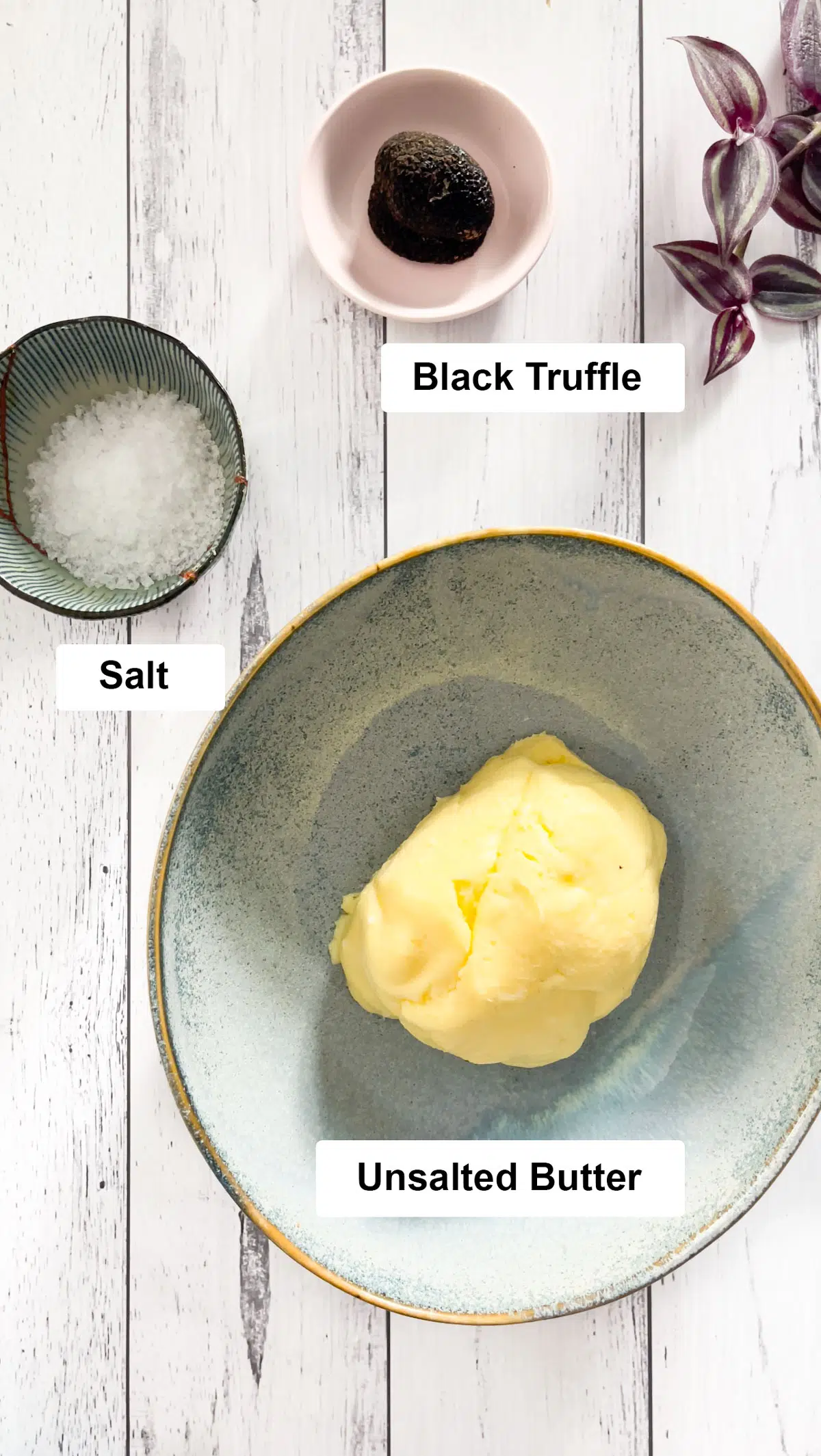
- Unsalted Butter – one of two main ingredients in this recipe. Go for unsalted, cultured (fermented) butter also known as European butter depending on your location. This type of butter is rich and creamy with a little tang from the fermentation process. Better yet, make your own Cultured Butter!
- Fresh black truffle – the earthy flavor of shines through and is a perfect pairing for a deliciously creamy butter.
- Sea salt – A little goes a long way here. I use ¼ tsp however, you can add more or less to your tastes. I like to sprinkle a little on top of the butter once its shaped too. To amp up the truffle flavor use my Truffle Salt Recipe in place of sea salt.
You can make this an extra special seasonal specialty by joining a truffle hunt to dig for you own. It’s a great experience and certainly gave me a greater appreciation for the harvesting complexities.
Substitutions And Variations
For a lighter truffle flavored butter, reduce the amount of truffle used. Or add more if you have it to spare and want a more intense flavor.
If fresh black truffles aren’t in season, or they’re not something you want to pay a high price for – use a high-quality truffle paste or finely minced preserved truffles as a substitute. Start with adding ½ teaspoon per stick/115g of butter. The intensity of these products can vary greatly so you may want to add more or less depending.
Do not use truffle oil as a substitute in this recipe. The artificial flavourings they contain often have a very harsh, chemical taste that will not mimic the flavour of fresh truffle that you’re after.
How To Make This Truffle Butter Recipe
While the actual prep for this recipe takes minutes, remember to set your butter out ahead of time. You need a soft, pliable base to properly mix in the truffle. I don’t recommend softening in the microwave because you don’t want it melted. Just soft and malleable.
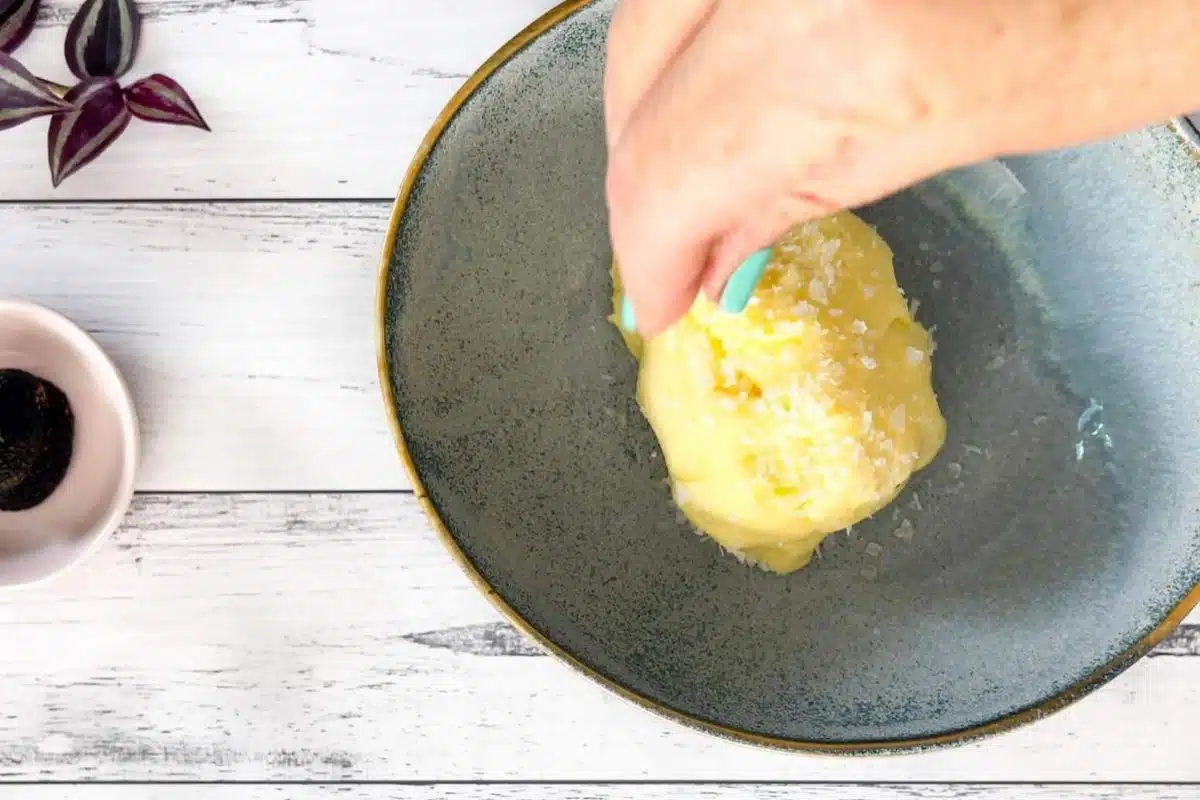
- Step 1: Soften the butter by leaving it to sit in a bowl on the bench for 30 minutes to an hour. Sprinkle the salt over the top.
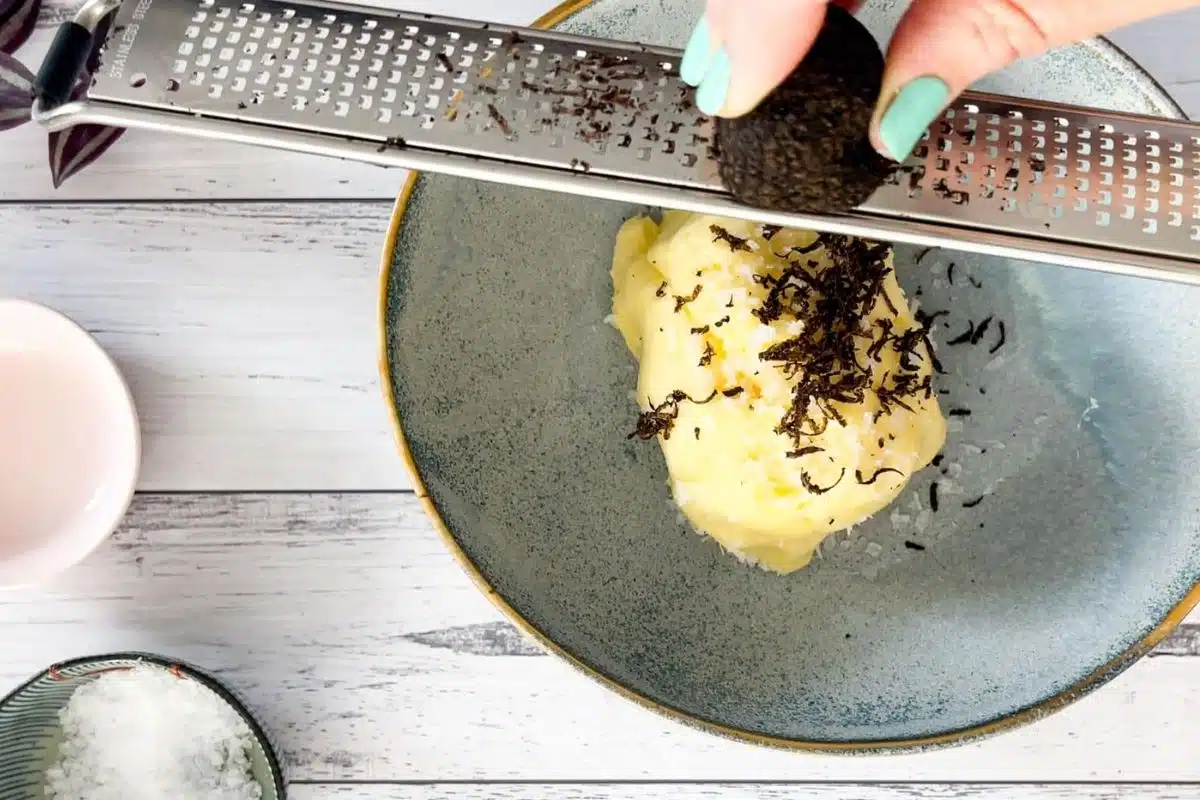
- Step 2: Using a microplane or other style of fine grater, grate the truffle straight over the top.
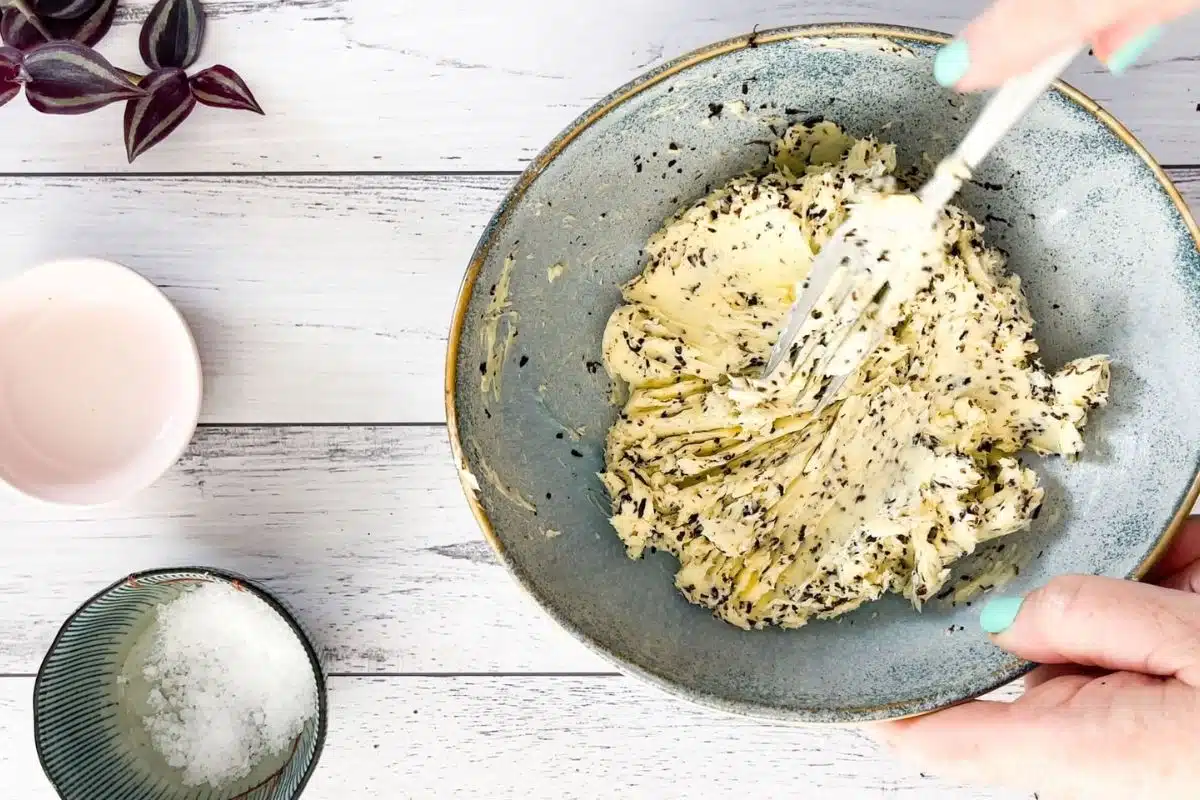
- Step 3: Mix the butter, salt and truffle together in the bowl with a fork. Mix well to evenly distribute the truffle. Refrigerate to firm up slightly so it’s easier to shape.
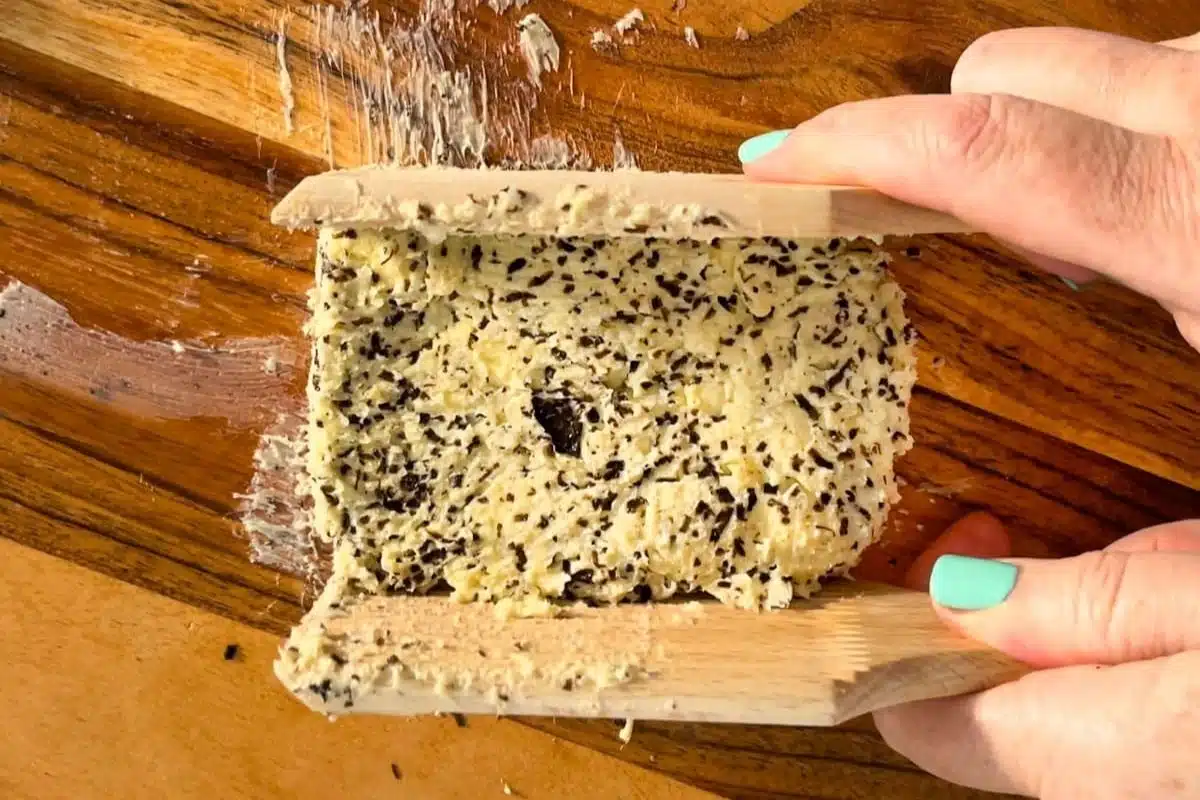
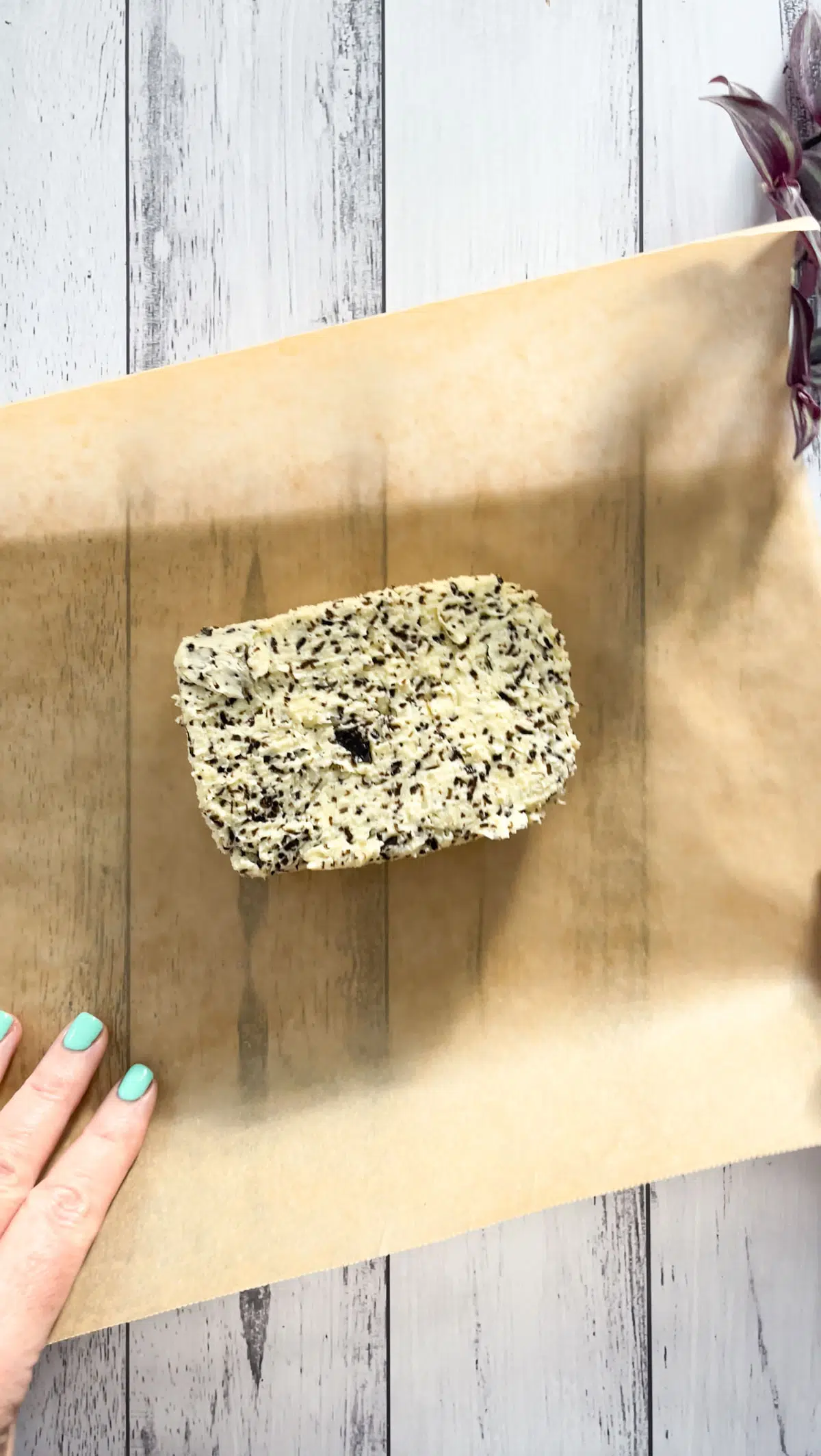
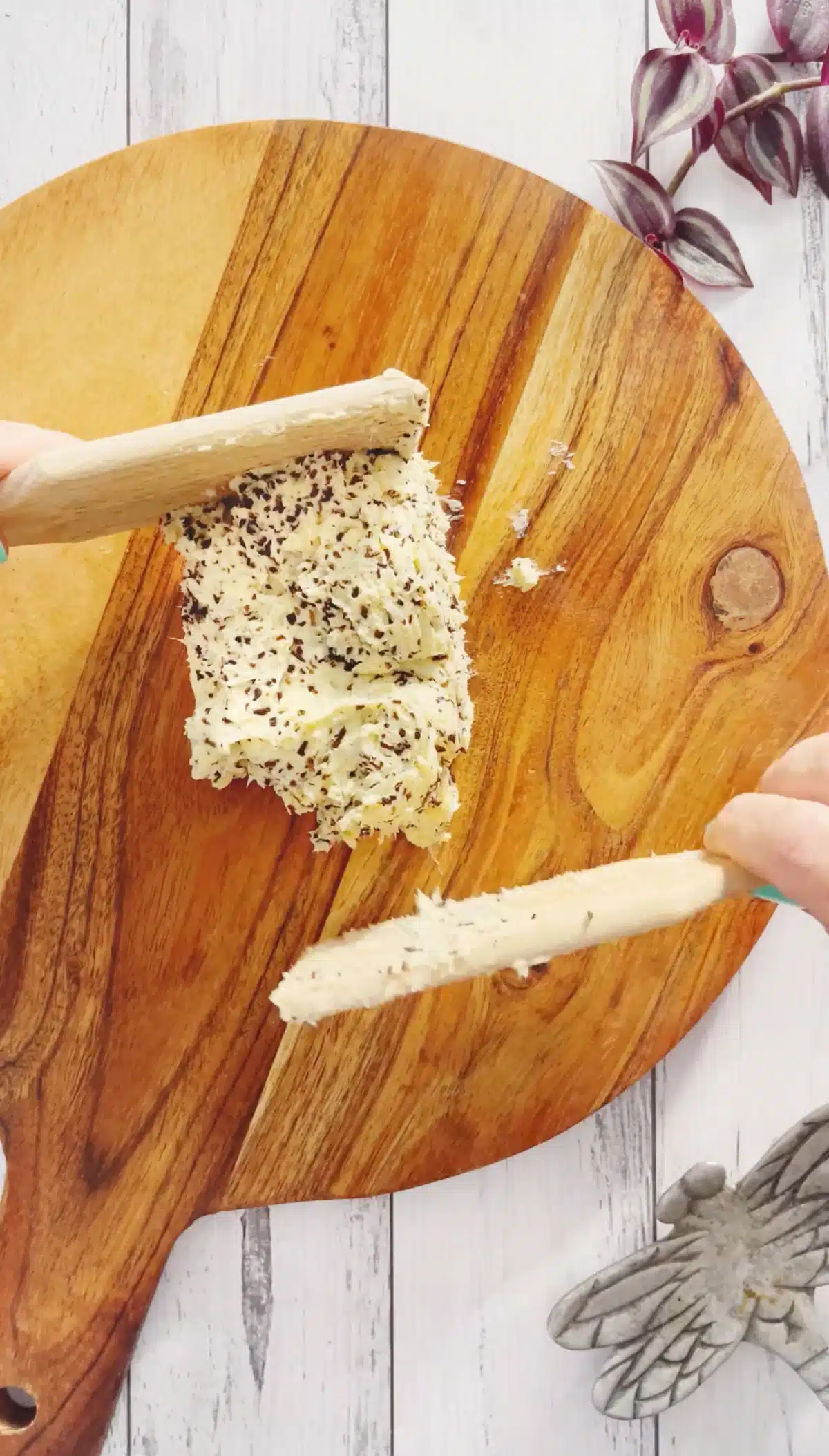
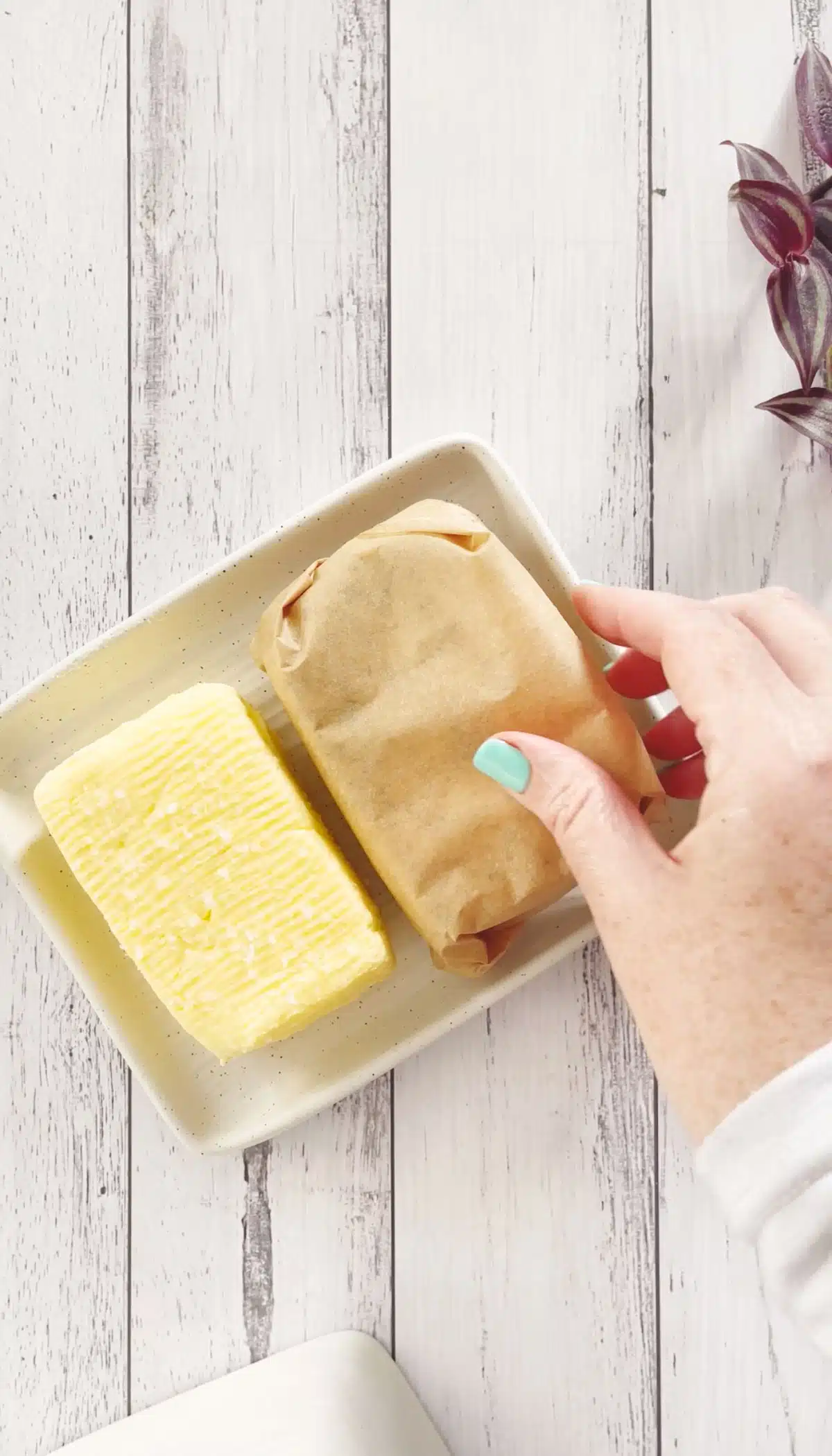
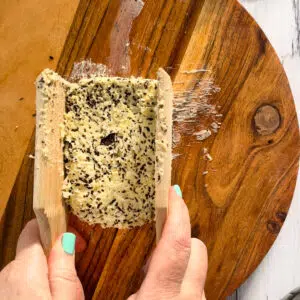
- Step 4: Remove the butter from the fridge and shape as you wish. Using butter will help shape it into a block. You can also roll it in parchment paper to create a log.
Once the truffle butter is mixed, refrigerate for at least 20-30 minutes so it firms up slightly. If you skip this step it will be difficult to shape. It will be equally difficult if you let it set to firm again too.
Once shaped to your desire, put it back in the refrigerator for storage. This helps retain that strong truffle flavor for many months.
What Can Truffle Butter Be Used For?
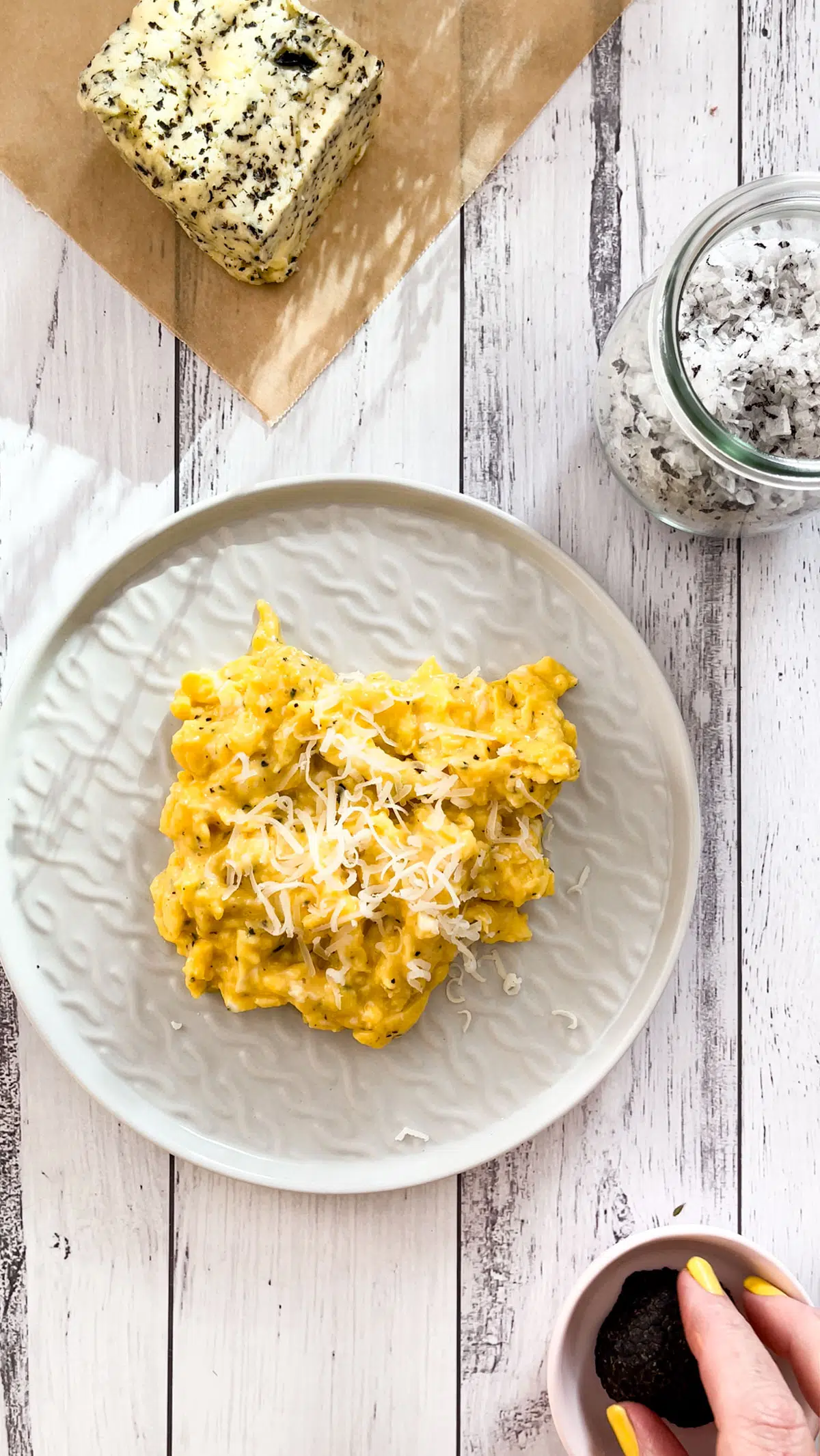
Truffle butter is the perfect finishing ingredient used to add deep, earthy flavor to any number of savory dishes. Heat can affect the truffle’s aroma, so it’s best used as an ingredient to mix through or dollop onto warm food just before serving.
Add some with the ricotta in this Lemon Ricotta Pasta recipe, dollop on Whole Roasted Cauliflower fresh out of the oven or spread on Vegetable Fritters.
Expert Tips
- A microplane is the perfect tool for grating the truffle. This creates a very fine grate that allows for better dispertion of the truffle throughout the butter.
- Speed up the time it takes for your butter to soften by chopping it into cubes before sitting it in the bowl.
- Use the best quality butter and salt you can find. The flavor of your truffle butter is only as good as the butter you use as the base. Opt for cultured/European unsalted butter for its higher fat content and richer flavour. Using unsalted also allows you to control the overall saltiness of the final product.
Storing And Freezing Tips
Proper storage is essential to maintain the flavor and aroma of your homemade black truffle butter. Wrap the truffle butter tightly in parchment paper or plastic wrap and then place it in a butter dish or any other airtight container you have. It will store in the refrigerator this way for up to 2 weeks.
To freeze, spoon the butter onto the long edge of a sheet of plastic wrap in a rough log shape. Fold the wrap over the butter, then hold the two ends of the plastic and roll the log across the counter away from you like a rolling pin. This motion naturally tightens the butter into a uniform log shape. Tie or twist the ends of the wrap to seal in the truffle aroma before freezing.
Truffle Butter Recipe FAQs
Did you make this recipe?
If you try this recipe, I’d love to know. Leave a comment, rate it, and remember to tag @wholenaturalkitchen in your pics or reels on Instagram, Facebook or TikTok!
Truffle Butter Recipe With Black Truffle
Equipment
- 1 Large mixing bowl
Ingredients
- 1 stick good quality, unsalted butter (Roughly 115g – see note 1)
- 0.4 oz freshly grated black truffle (10-12g – see note 2)
- ¼ tsp salt (optional)
Instructions
- Soften the butter by leaving it to sit in a bowl on the bench for 30-minutes to an hour.
- Add the salt, then grate the truffle straight over the top.
- Mix well to ensure the truffle is evenly distributed throughout the butter.
- Put the butter back in the fridge for 45 mins to an hour to firm up slightly. This will make it much easier to shape back into a block or a log. If you're keeping it pressed in a small dish you can do this straight away then place in the fridge.
- If shaping into a block or log – remove the butter from the fridge and shape as you wish. I used butter pats to shape mine back into a block. You can also roll it into a log in baking paper and store it that way.
- Store in the fridge. This will keep its lovely truffle flavour for a good couple of months.